

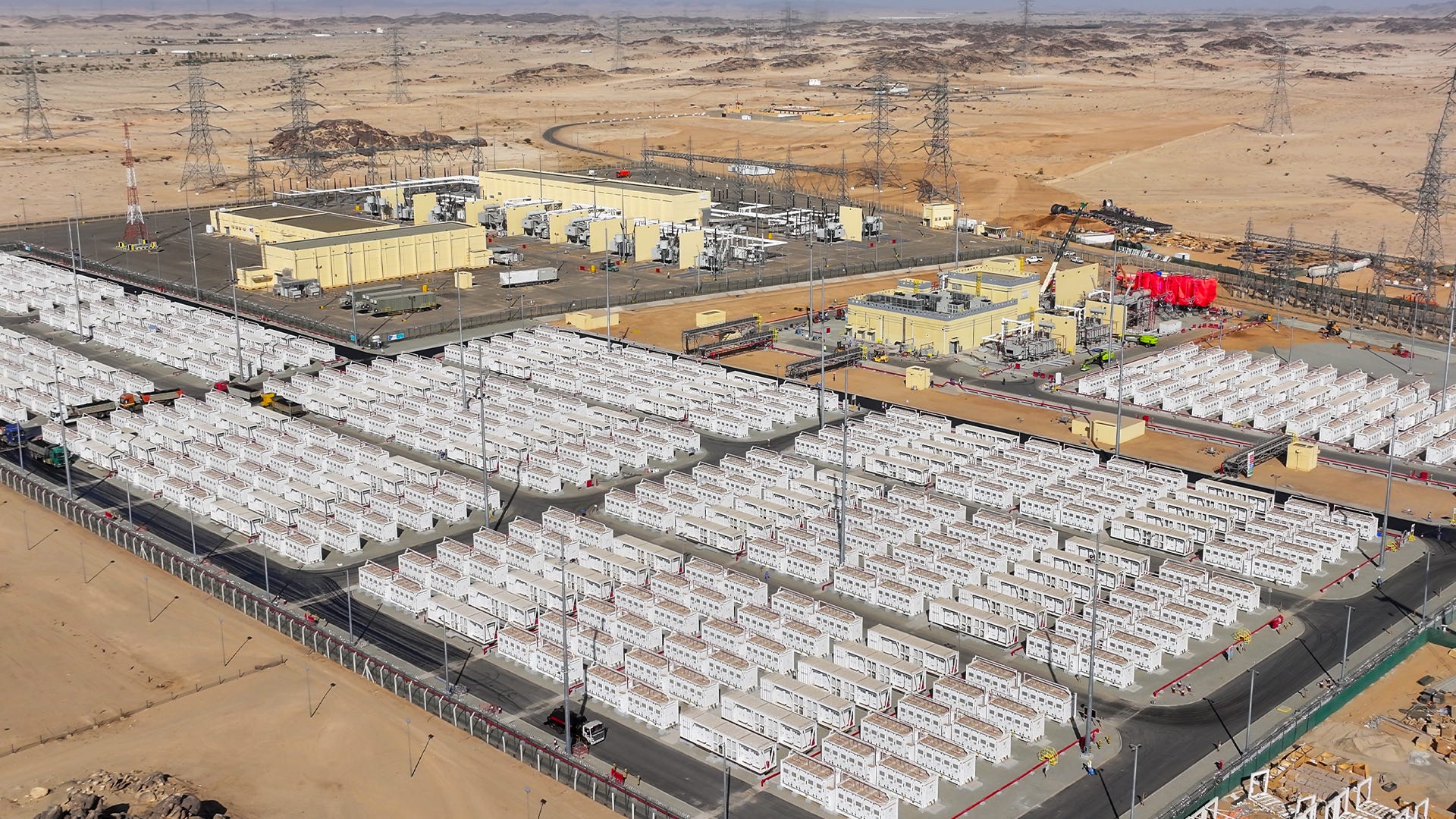
It’s 1:17 p.m. in July. The ambient temperature is 48°C. The steel enclosure of a battery container approaches 70°C.
Inside, the cooling system is running at full speed with compressors humming and pumps forcing the coolant across racks of tightly packed lithium-ion cells. The heat load is relentless.
At the same time, batteries are charging at peak power to absorb the surge of electricity generated by the nearby solar arrays, adding internal heating to the external thermal stress. The system was designed to hold 23°C but it is fighting to stay below 33°C.
This is a hypothetical scenario, but it illustrates a problem that is becoming increasingly relevant to battery energy storage systems (BESS): the environment in which batteries operate is changing.
A battery project that was designed, modeled, financed, and insured for a specific set of conditions is now operating in a fundamentally different and unexpected regime.
At high temperatures, the electrochemical reactions responsible for battery aging accelerate. Parasitic reactions in the electrolyte speed up, the electrode-electrolyte interphases destabilize, and internal resistance creeps higher with each cycle.1 Over time, this can contribute to faster capacity loss, narrower safety margins, and declining performance.
Most importantly, for a BESS owner the consequences are ultimately economic.
Faster degradation can reduce usable energy and shorten the period over which an asset can reliably deliver its contracted services. Meanwhile, a hotter environment increases the energy required for thermal management. This results in higher operating costs, greater auxiliary electricity consumption, and lower returns than the original project model anticipated.
What was underwritten as a 10-year asset of predictable performance begins to deviate from the assumptions that justified its cost.
One could argue that this is simply a matter of project engineering, since we already have the tools to fight high temperatures: properly sized cooling units, more frequent maintenance, etc. After all, there are already operational batteries in some of the hottest parts of the world.
The argument would be largely correct, but with a nuance: what happens when climate itself becomes a moving target?
What happens when a BESS is designed against a specific climate that turns out to be far hotter and more volatile than historical models predicted?
A battery project is a long-lived infrastructure asset designed to earn revenues over thousands of cycles. It may be modeled over a decade or more of operation. Its financial performance depends on assumptions about how much energy it can store, how efficiently it can deliver that energy, and how quickly its capacity will deteriorate.
Temperature affects all three of these variables.
Welcome to Lithium Horizons! This newsletter explores the latest developments, companies, and ideas at the frontiers of energy materials. Subscribe below to get the next article delivered straight to your inbox.
The costs of staying cool
Batteries are becoming a cornerstone of the modern power grid.
They are increasingly used to manage variability in electricity generation, particularly when paired with solar and wind. They are also increasingly used to manage electricity consumption, by shifting demand away from periods of peak grid demand.
There is, however, a paradox.
The hotter the environment, the harder and more expensive it can be to operate the batteries needed to manage the electricity system.
Thermal management units capable of handling wider temperature variability can add to the capital cost of a BESS. Pumps, compressors, heat exchangers, controls and other components must themselves operate reliably under more demanding conditions.
There are operating costs, too. Thermal management systems consume electricity, and equipment operating under harsher conditions can require more frequent inspections and maintenance.
Most importantly, the hotter the environment, the harder the system has to work to reject heat.
This creates an uncomfortable loop: higher temperatures → greater cooling demand → higher auxiliary electricity consumption → lower net energy delivered by the BESS → less profitable asset.
Over thousands of charge-discharge cycles and many years of operation, relatively small changes in auxiliary consumption, degradation or availability can become financially significant.
A hotter operating environment can increase the lifetime cost of delivered energy by increasing the cost of thermal management, accelerating degradation and reducing the amount of energy an asset can usefully deliver over its operating life.
Let’s take the 500 MW / 2 GWh BESS project in Aseer, Saudi Arabia, as an example.
Assuming the BESS performs one fully cycle per day, that represents: 2 GWh x 365 = 730 GWh of annual discharged energy.
If auxiliary consumption represents 2% of this annual discharged energy, that would result in 730 GWh x 2% = 14.6 GWh/year of electricity consumed by the plant itself.
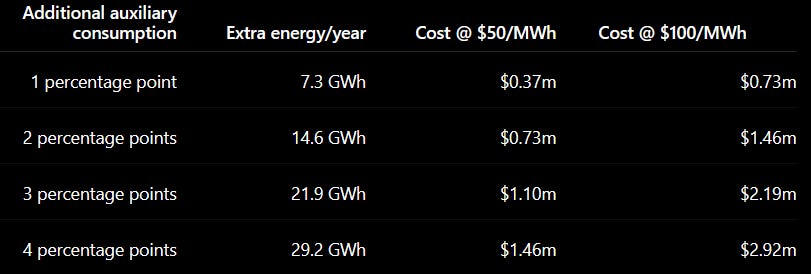
Now, assume that hotter operating conditions increase auxiliary consumption to 5%. The BESS would then consume 36.5 GWh/year.
That is an additional 21.9 GWh/year of electricity consumed by the BESS rather than available for its intended purpose.
At an illustrative electricity value of 50 USD/MWh, that additional consumption represents approximately 1.1 million USD per year in energy cost. Over a 10-year period, this ends up being 11 million USD.
And this is only the effect of higher auxiliary electricity consumption. The calculation does not account for other potential costs associated with hotter operating conditions, such as accelerated battery degradation, earlier replacement of components, or additional maintenance.
Moving goalposts
For years, battery engineers could treat temperature largely as one of the operating conditions to be managed.
The climate question introduces a different problem: the operating conditions themselves are changing.
Global temperatures have risen substantially over the past century, and recent years have been exceptionally warm. Berkeley Earth estimates that 2025 was the third warmest year on record, following the record years of 2024 and 2023.
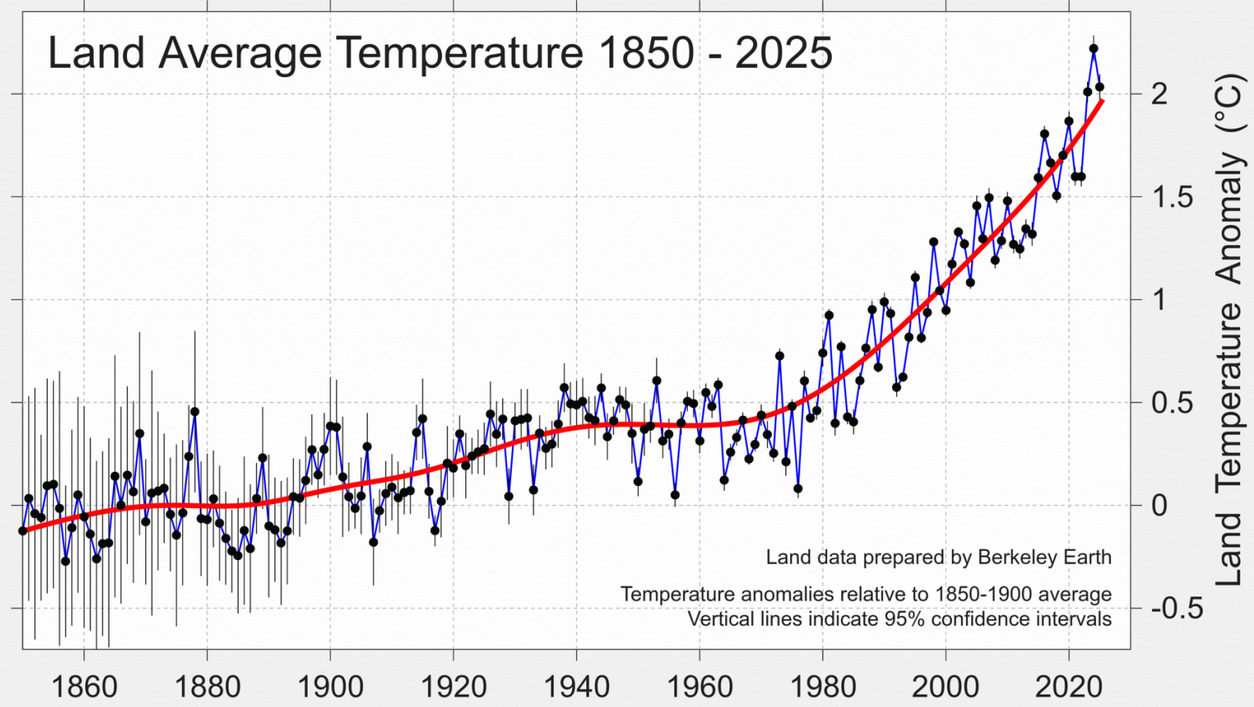
A BESS project designed around historical temperature distributions may not necessarily face the same environment over its economic life. This is particularly important for infrastructure financed on long horizons where revenues depend on assumptions about future electricity prices, degradation and availability.
Climate change can invalidate some of these assumptions.
A battery itself does not need to physically fail for the investment thesis to fail. It can simply become an asset that is less profitable over time.
Ultimately, this becomes a problem of modeling uncertainty. Historical weather data may no longer be enough to predict the thermal environment an asset will experience over its operating life. And developers may need to consider a wider range of future climate scenarios.
Why do we need cooling?
Why does a BESS even need a thermal management system in the first place?
At first glance, cooling looks like a parasitic load attached to a system whose entire purpose is to store electricity and return it when it is valuable.
The answer lies in the chemistry of the battery cell.
Each BESS is made out of a large number of individual cells. A typical lithium-ion cell contains repeated anode, cathode, electrolyte layers, separators, and current collectors.
For many BESS applications today, lithium iron phosphate (LFP) is a common cathode chemistry, paired with graphite anodes and LiPF6-based organic liquid electrolytes. These components are designed to operate optimally within particular temperature ranges.
At the interfaces between the electrodes and electrolyte, thin interphase layers form that are critical to battery performance and ageing. They influence how ions move through the cell, how quickly the cell can charge and discharge, how much resistance develops and how the cell ages over time.
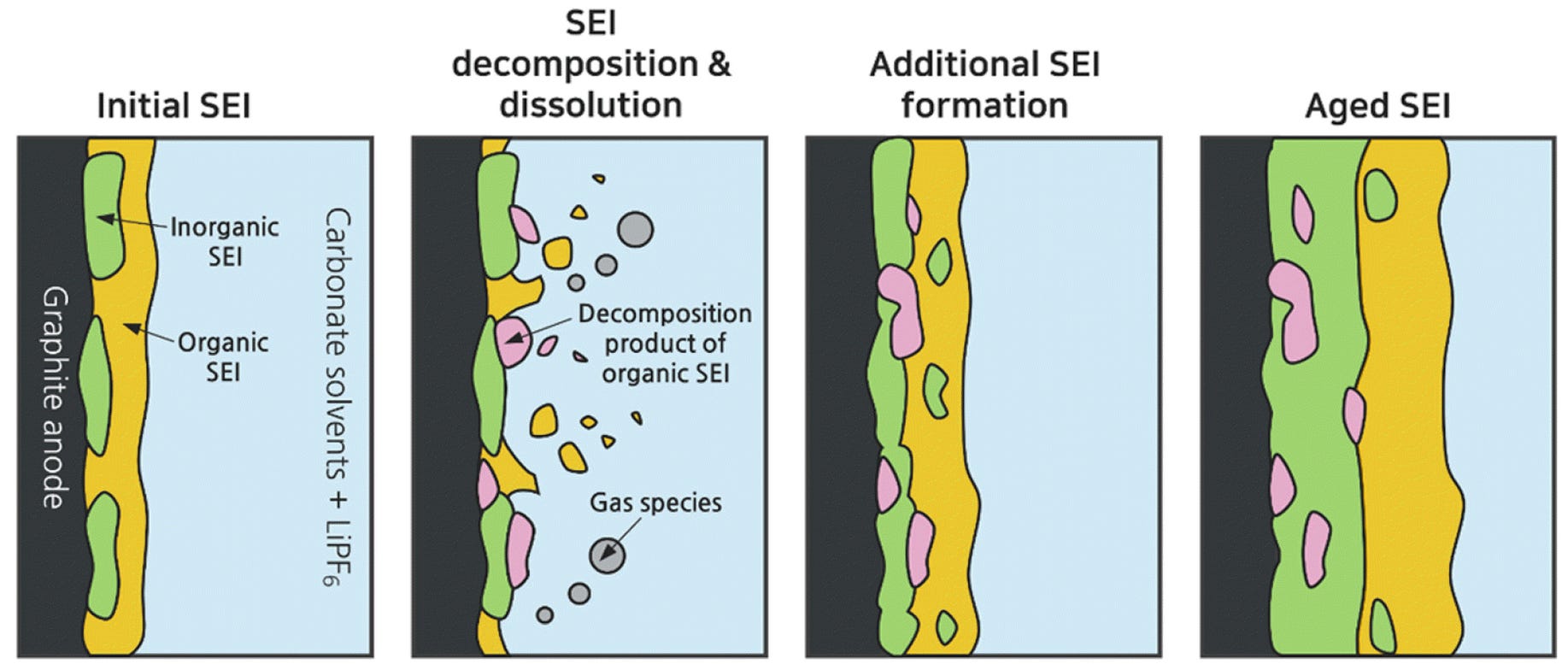
Interphases are also sensitive to temperature and operate optimally within relatively narrow ranges.
If the ambient temperature outside a BESS is already above the preferred operating range, the system needs a way to remove the heat and maintain the cell within their target window.
Hence the cooling system.
The problem with cooling
Cooling is an effective engineering solution but it is not free.
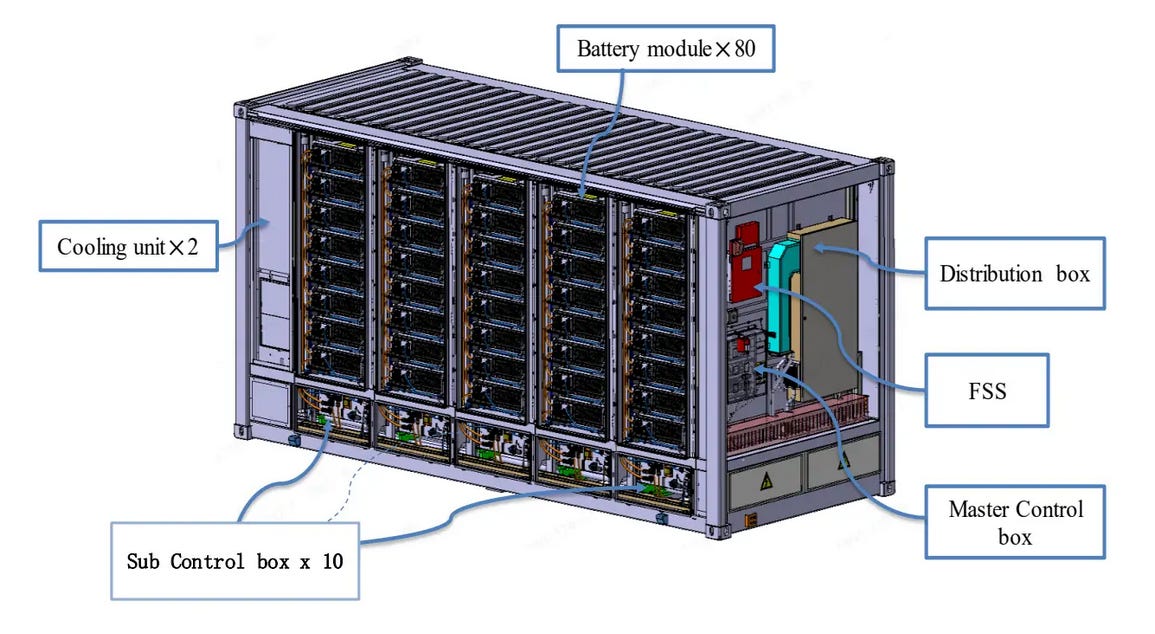
The cooling system consumes energy. It adds equipment, controls and maintenance requirements. It occupies space and adds complexity. And its own performance depends on the environment in which it operates. In fact, as the temperature of the environment rises, rejecting heat becomes harder.
This means that designing a BESS for a hotter climate is not simply a matter of installing a larger air-conditioning unit. The entire system has to be considered, from cell chemistry and module architecture to container design, heat-transfer pathways, controls, etc.
All of this changes the economics of a project.
Should we get rid of cooling?
Imagine a BESS that requires no cooling because its cells can operate efficiently and safely across a much wider temperature range.
And, if the underlying chemistry also provides competitive on specific energy, cycle life, and cost, it could change the economics of BESS deployment.
That would be a vastly superior product.
Therefore, the challenge is not simply to find materials that survive higher temperatures. It is to develop cells that can perform economically at those temperatures with acceptable degradation rates, cycle life, and power capability.
The battery industry has largely optimized for cost, energy density and cycle life. As extreme temperatures become a more important operating constraint, thermal resilience could become another dimension of battery performance and potentially another source of competitive advantage.
The next battery breakthrough may not be the one that store more energy. It may be the one that can do so when the world around it gets hotter.
That’s all for now — until next time! 🔋
If you enjoyed reading this piece, consider sharing and subscribing to Lithium Horizons. It helps support future articles on materials powering the energy transition.
You may also like


An interphase is a thin layer that forms at the interface between two materials with distinct properties.
Is all this relevant with the production of much more temperature tolerant sodium batteries ramping up?