
Welcome to Lithium Horizons! This newsletter explores the latest developments, companies, and ideas at the frontiers of energy materials. Subscribe below to get the next article delivered straight to your inbox.
When Northvolt’s financial troubles became public, many observers saw it as a serious blow to Europe’s fragile battery industry. The collapse of one of the continent’s most ambitious gigafactory projects raised uncomfortable questions about whether the West could realistically compete with Asian battery giants.
Then an unexpected buyer appeared: Lyten, a U.S startup developing lithium-sulfur (Li-S) batteries.
The acquisition instantly transformed Lyten from a niche company into a player with industrial-scale ambitions. But to understand why Lyten made such a bold move, we first need to understand what the company actually is and why it believes its technology could change the future of batteries.
What is Lyten Inc?
Founded in 2015, Lyten is a Silicon Valley startup focused on advanced materials engineering. Contrary to popular belief, it is not purely a battery company. Instead, it markets itself as a supermaterial applications company, emphasizing the central role of materials science and engineering in its products.
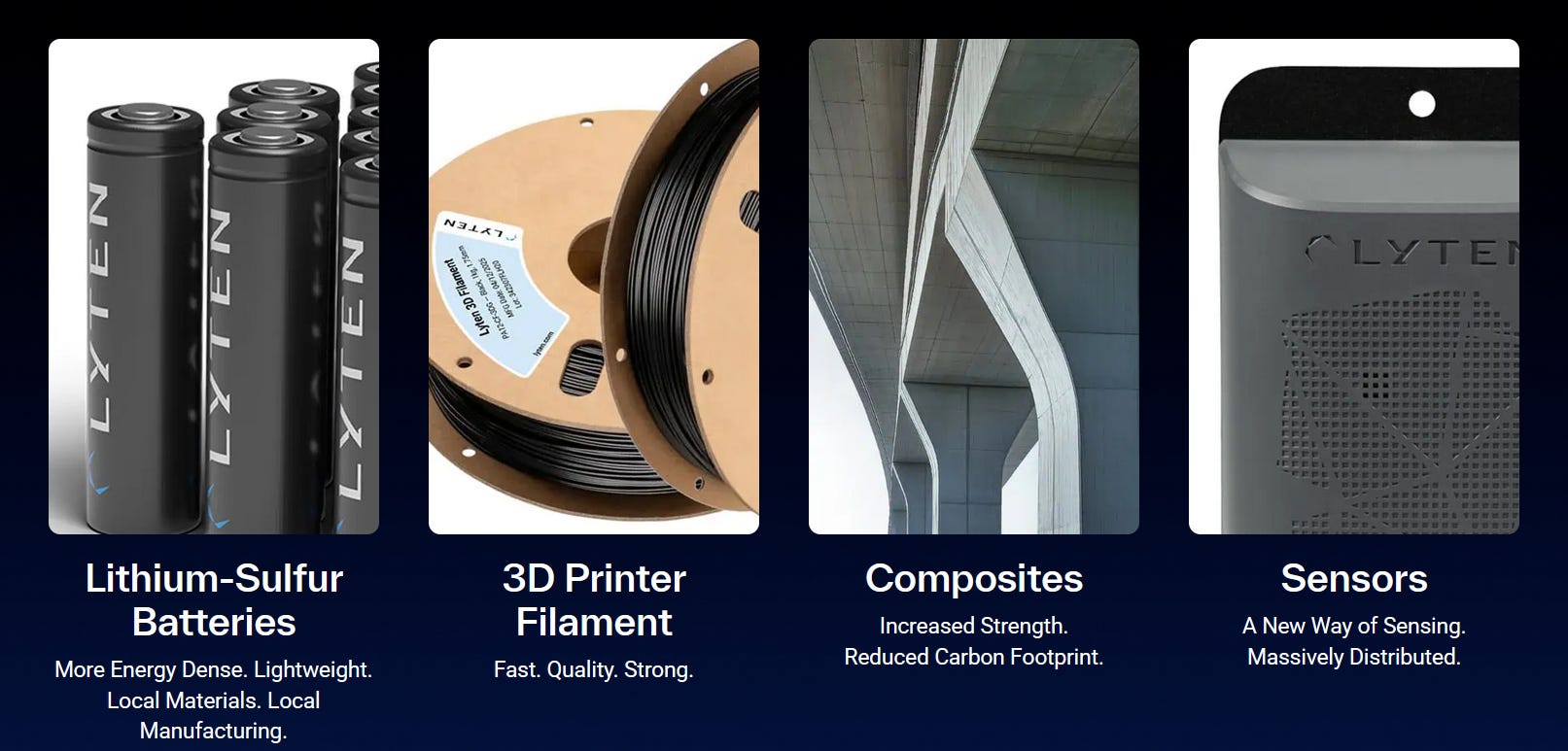
Lyten’s flagship technology, 3D Graphene™, is a greenhouse-originated carbon material that offers unique resistive, capacitive, inductive, structural, and energy absorbing properties. The key feature of this material is its tunability. Its structure can be adjusted for a wide range of applications. In fact, Lyten’s website lists a number of seemingly disconnected products, all based on this graphene-based supermaterial (Figure 1).
Its batteries have successfully powered unmanned aerial vehicles and the company actively promotes its batteries for mobility, defense and aerospace applications. Last year, it acquired several assets from the bankrupt battery manufacturer Northvolt, including its Polish battery energy storage system (BESS) factory (Northvolt Dwa). In the press release, Lyten highlighted that it intends to expand ‘‘its product line to include the world’s first BESS powered by lithium-sulfur batteries‘‘.
Beyond batteries, its products are also used in 3D printing, concrete admixtures, structural adhesives, sensing, packaging, and other applications.
Company snapshot
Founded: 2015
HQ: San Jose, California, USA
CEO: Dan Cook
Employees: ~300 (pre-Northvolt acquisition)
Funding: $625M+
Valuation: ~$1.5 billion (2023)
Key investors: Prime Movers Lab, Stellantis Ventures, FedEx, Honeywell, etc.
Notable technical experts:
Kumar Bugga - a Senior Fellow at Lyten and Principal Member of Technical Staff at NASA Jet Propulsion Laboratory. He is the acting technical reference for Lyten’s batteries, having extensive experience in specialized batteries for several flight missions including Mars Exploration Rovers, outer planetary missions (e.g. Europa Clipper and Lander), and others.
Celina Mikolajczak - Chief Battery Technology Officer at Lyten (until August 2025) and ex-QuantumScape, Panasonic Energy, and Tesla. She was responsible for advancing the manufacturing of Li-S batteries through the ramping of pouch and cylindrical cell pilot production.
Chaitanya Khare - Head of Reactor and Materials Industrialization at Lyten and ex-Dow Chemical. He leads the industrialization of 3D Graphene™ material production.
Business model and market focus
Lyten’s business model is built on a materials-first platform centered on its proprietary 3D Graphene™ material produced from greenhouse gases. Since this material can be tailored for multiple uses, Lyten can effectively address several markets with a single core technology and insulate the company from downturns in any one sector.
The company currently targets sectors that prioritize supply chain independence, such as drones, aerospace, and defense. By focusing on these niche, high-margin markets, Lyten can generate early revenue to support the scale-up of its flagship Li-S battery technology for mass electric vehicle and energy storage businesses.
Partnerships with OEMs (i.e., original equipment manufacturers) like Stellantis, Honeywell, and FedEx provide opportunities for co-development and early product validation. Key collaborations include space applications with the U.S. Defense Innovation Unit, aviation with Honeywell, logistics with FedEx, and electric vehicles with Stellantis.
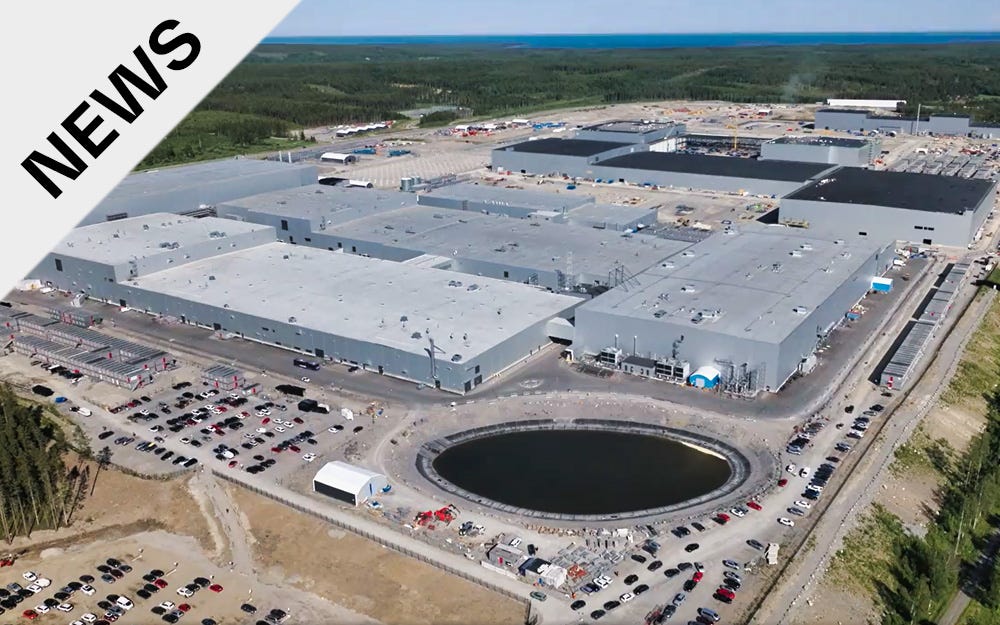
After acquiring Northvolt assets (Figure 2), the company has also announced plans to open a headquarters in Luxembourg to support European market expansion. The company intends to restart operations in all facilities utilizing Northvolt’s existing lithium-ion NMC technology, with plans to gradually integrate Lyten’s Li-S batteries into the product portfolio.
Rather than positioning itself solely as a battery company, Lyten frames its identity as a clean-tech manufacturer with a locally sourced supply chain. Its narrative emphasizes sustainability, transforming greenhouse gases into advanced materials that power a range of next-generation technologies.
Overall, this strategy positions Lyten as a resilient company with a consistent sustainability narrative (i.e., sustainability and a path to net zero) across diverse markets. Its main advantage lies in the nature of its product: a versatile wonder-material that can be tweaked and tuned for different use cases.
Core technology: 3D Graphene™
Lyten’s core technology is its 3D Graphene™.
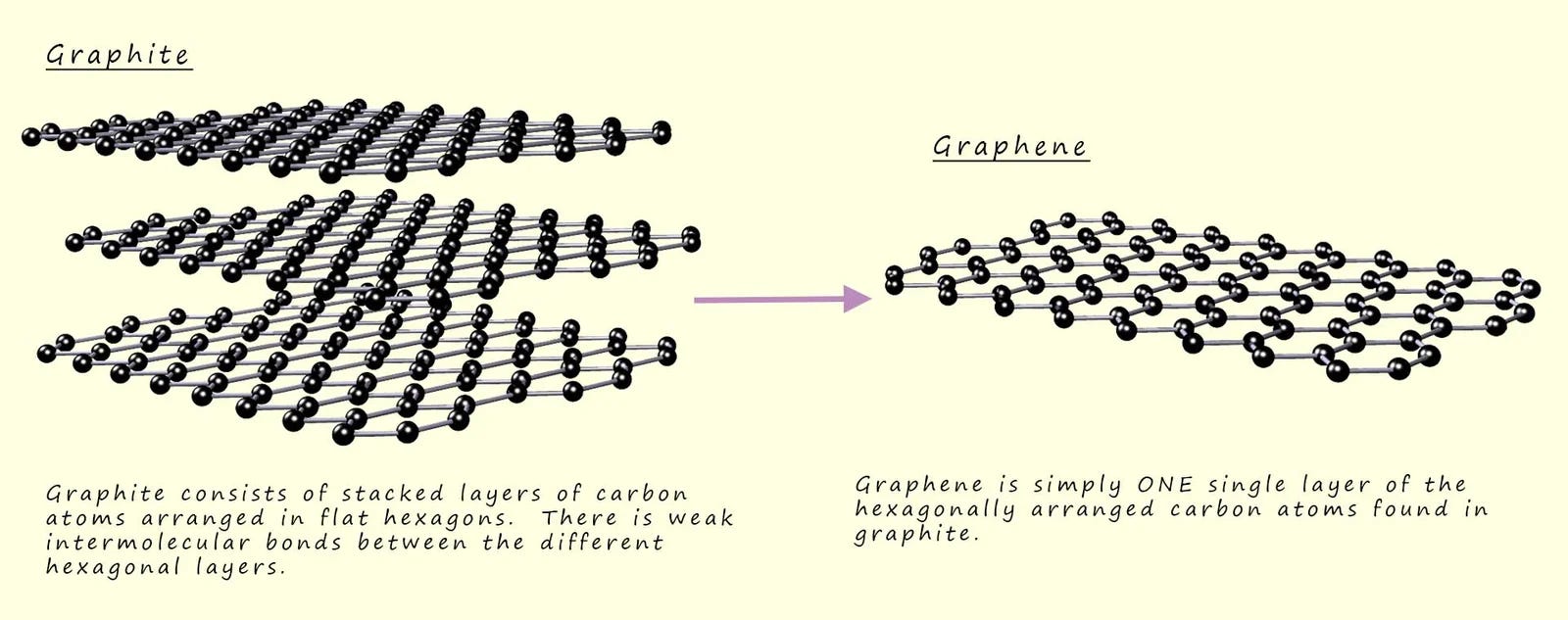
Graphene is a two-dimensional material composed of carbon atoms arranged in a hexagonal lattice. Essentially, it is a single-atom-thick layer of graphite (Figure 3), boasting exceptional properties such as extraordinary strength and outstanding electrical and thermal conductivity.
The company converts greenhouse gases into solid carbon, which forms the basis of what Lyten calls 3D Graphene™, a material whose properties can be tuned through morphology changes and bonding with other elements. This allows it to be adapted for multiple applications.
The exact process Lyten uses to convert greenhouse gases into graphene is proprietary and not publicly disclosed. What is known is that it is a non-combustion, non-polluting method that transforms methane into solid carbon with hydrogen as a byproduct. The rest, we can deduce from their patents.
Patents on carbon materials
The company lists more than 550 granted or pending patents, most of them in carbon materials synthesis and reactor design:
US9862606B1 (filed in 2017) describes a catalyst-free method for thermal cracking of hydrocarbon gases into highly ordered and high surface carbon nanoparticles (i.e. graphene, nano-onions) at a rate of up to 200 g/hr.
US9862602B1 (filed in 2017) describes the design of a continuous flow reactor for catalyst-free thermal cracking of hydrocarbons into carbon nanoparticles and hydrogen gas.
US9767992B1 (filed in 2017) describes the design of a microwave plasma reactor that allows the production of different carbon allotropes (i.e., graphene, nano-onions, nanotubes, graphite, fullerene).1
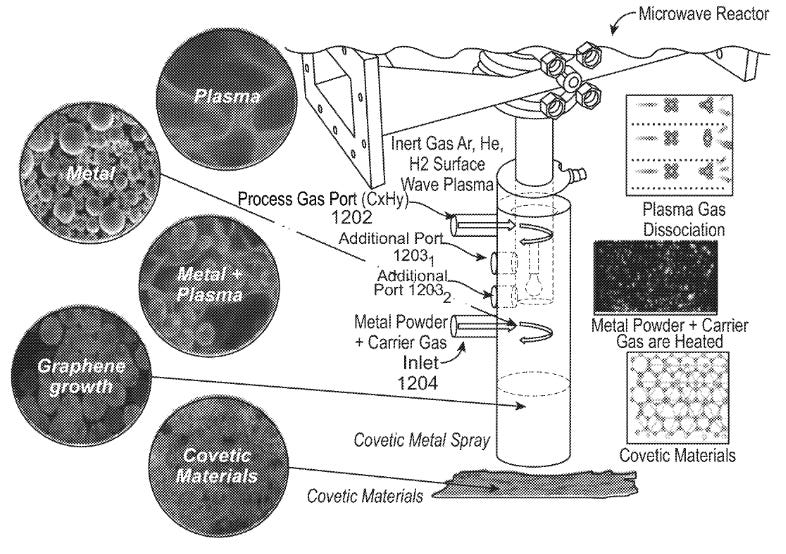
US12320008B2 (filed in 2023) describes a pulsed microwave reactor design for producing covetic materials (i.e. carbon-metal composites) made out of graphene nanoplatelets and metals, such as aluminum or copper (Figure 4).
US12479730B1 (filed in 2024) describes a method of producing oxidized carbon allotropes with up to 10 atomic percent content.
What is 3D Graphene™?
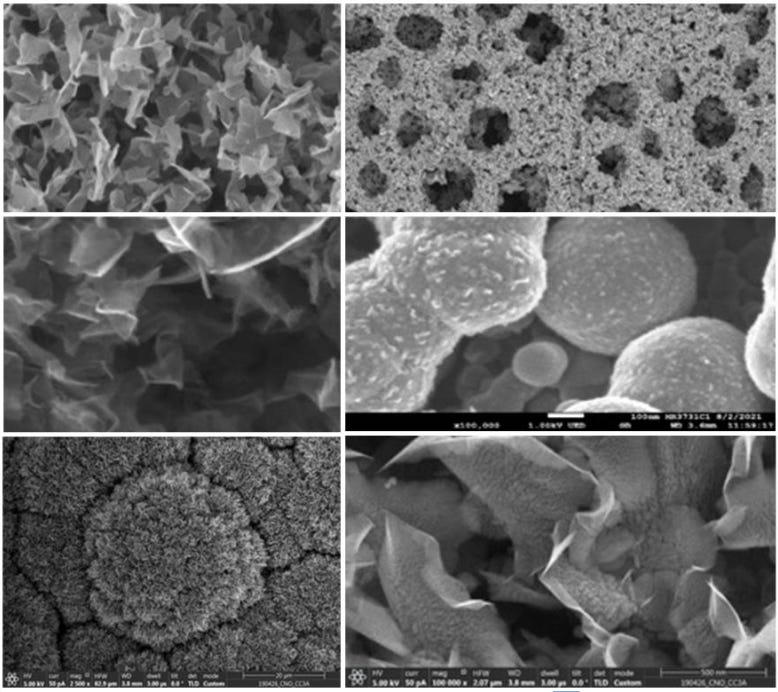
Judging by its patents and published images, Lyten appears to be using a catalyst-free plasma-based reactor approach to produce carbon nanomaterials from methane. The released images (Figure 5) show that the company has a reasonable control of the carbon morphology. However, this control is not translating to a pure monolayer graphene.2
Lyten’s proprietary 3D Graphene is a complex ‘‘soup’’ of carbon nanomaterials: few-layer graphene (i.e., several layers of graphene; up to 15 according to one of their patents), thin graphite, amorphous carbon, fullerenes and others. This results in a hierarchical structure full of pores and crevices that can be tuned using process parameters (i.e., temperature, pressure, etc.).
Therefore Lyten’s super material is not pure graphene. It is also not pure graphite. Instead, it it occupies a middle ground between the two, has in-between properties, and is structured in such a way to have a high-enough surface area to be able to mix well with sulfur (for batteries) and other materials.
Manufacturing scale is critical
Lyten’s strategy is unusual in the battery industry. Rather than starting with a single product, the company has built its business around a materials platform. However, the success of this strategy ultimately depends on one critical factor: scale.
Producing complex carbon materials with consistent properties is notoriously difficult. For Lyten’s model to work, its reactors must be able to manufacture large volumes of 3D Graphene™ at low cost while maintaining tight control over morphology and quality between production batches.
If the company succeeds, it could unlock new applications for graphene-like carbon materials across energy storage, structural materials, and electronics. If it fails, the technology may remain limited to niche, high-value applications.
The acquisition of Northvolt’s assets gives Lyten an industrial infrastructure and an opportunity to test whether its materials platform can scale beyond the laboratory.
In the next article, we examine Lyten’s Li-S in detail and evaluate whether this long-promised technology can finally overcome the limitations that have held Li-S back for decades.
That’s all for now — until next time! 🔋

If you enjoyed reading this piece, consider sharing and subscribing to Lithium Horizons. It helps support future articles on materials powering the energy transition.
An allotrope is a different physical form of the same chemical element. Diamond, carbon nanotubes, graphene, carbon nano-onions, and fullerenes are all allotropes of carbon.
Strictly speaking, graphene is a single-layer of graphene, while several layer, up to around 5, is few-layer graphene. Anything thicker than that enters the graphite territory. This is because all the wonderful properties of graphene are due to its monolayer structure where electrons act like massless particles (Dirac fermions) and the more layers you add the more you lose these properties.
To be honest, once Celina Mikolajczak left, which coincided with the company putting Li-S on the back burner and shifting toward a more established approach while trying to revive Northvolt’s assets, I lost interest in the company.